Times Square
This design was initially created as part of a digital design project in an intermediate computer-aided apparel design course. Students were tasked to develop a sustainable line of apparel, in accordance with the AATCC Concept 2 Consumer 2022 competition guidelines. I studied the reusability of vinyl billboard for apparel products, enamored by the possibilities of upcycling vinyl billboard for apparel I continued my exploration outside of class. I went ahead to purchase a used vinyl billboard and experimented with it to create garments. I worked diligently to experiment with new techniques and determine best practices for using billboard vinyl in apparel. This project was submitted along with a written research abstract and accepted into the 2023 ITAA conference.

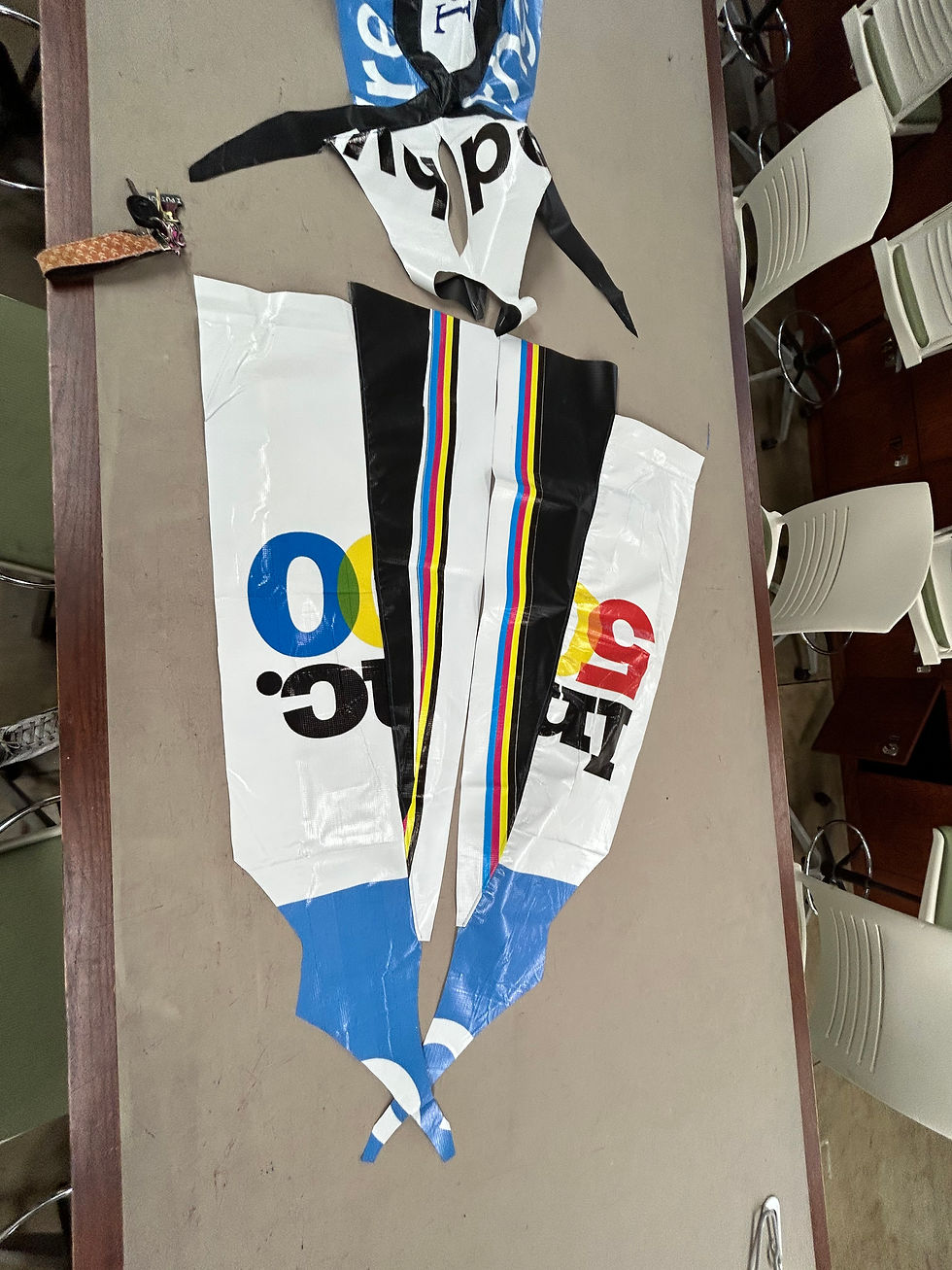

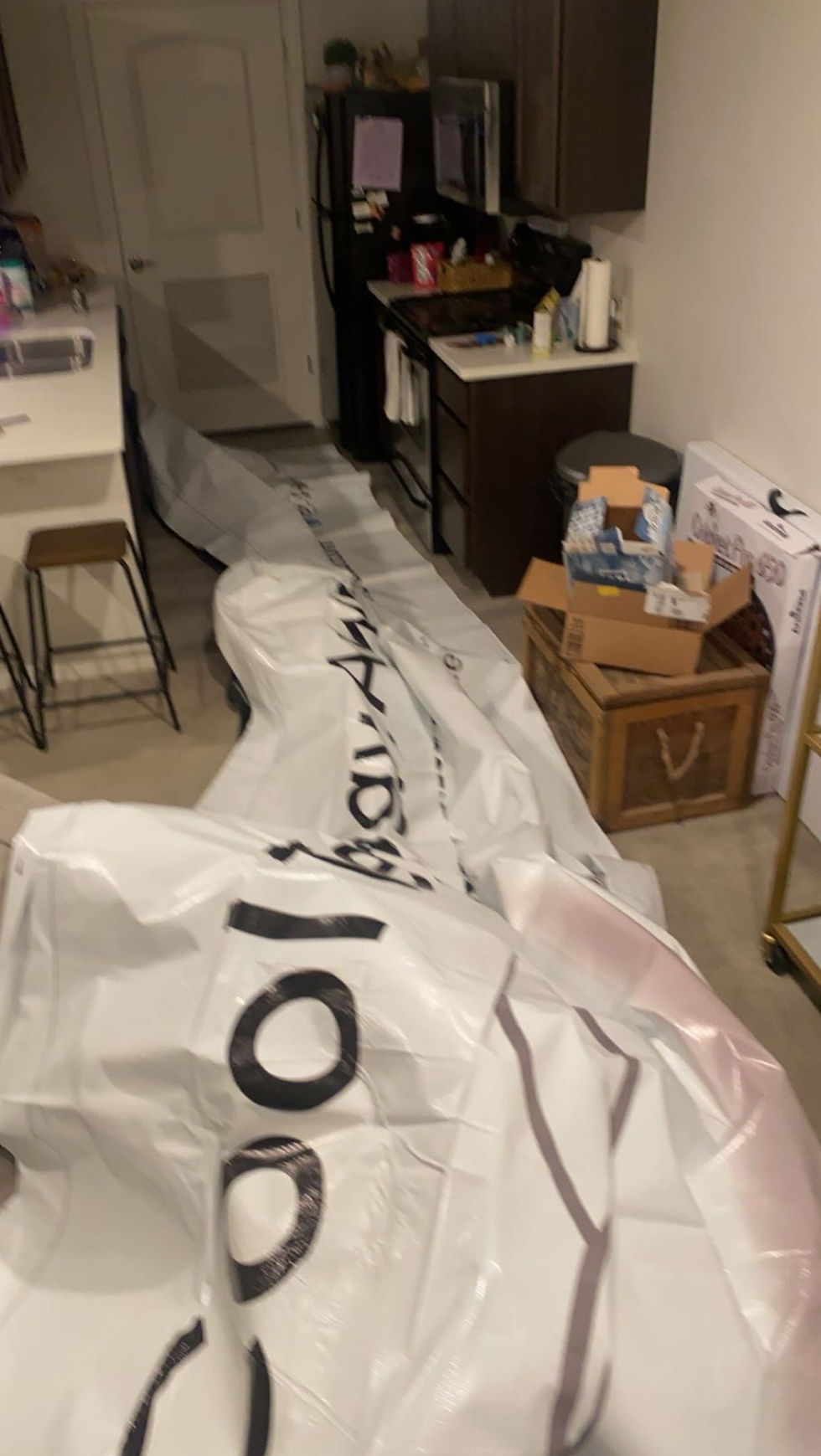


A vinyl billboard is used for 7 months on average before it is taken down. But where does it go afterwards? To answer this question, I started at the beginning of a vinyl billboard's lifecycle. Billboard vinyl is a 3-ply design making it durable, tough, and long-lasting with vinyl coating and UV protection on both sides of the material (Billboard Tarps, n.d.). A rip-stop nylon scrim is sandwiched between the vinyl to prevent tearing (Effortless Outdoor Media, 2018). One vinyl side is the actual ad, while the other is typically solid black. About 25 million square meters or about 10,000 tons of billboard fabric waste is generated annually in the U.S. alone (Zee, 2010). While billboard vinyl can be recycled an infinite number of times, they are still often dumped into landfills, contributing to pollution. While this is an unsustainable material, approximately 137 million square feet of vinyl is produced each year (Effortless Outdoor Media, 2018). Since outdoor
Statement of Purpose
vinyl is specifically designed to withstand harsh outdoor weather conditions (Saroj et al., 2018), upcycling billboard vinyl when it reaches its intended end of life can create incredibly durable apparel products, limit landfill waste, and reduce pollution. Companies like Rareform are upcycling billboard vinyl into tote bags (Rareform, n.d.), however the use of billboard vinyl for apparel products has only ever been explored by O’Rourke-Kaplan’s 2013 design “On the Road Again”. An opportunity exists to further explore this alternative material for apparel. The Times Square dress was created with the desire to reduce the amount of vinyl waste that ends up in landfills by giving vinyl a second life to create highly durable and one-of-a-kind streetwear.
Aesthetic Properties and Visual Impact
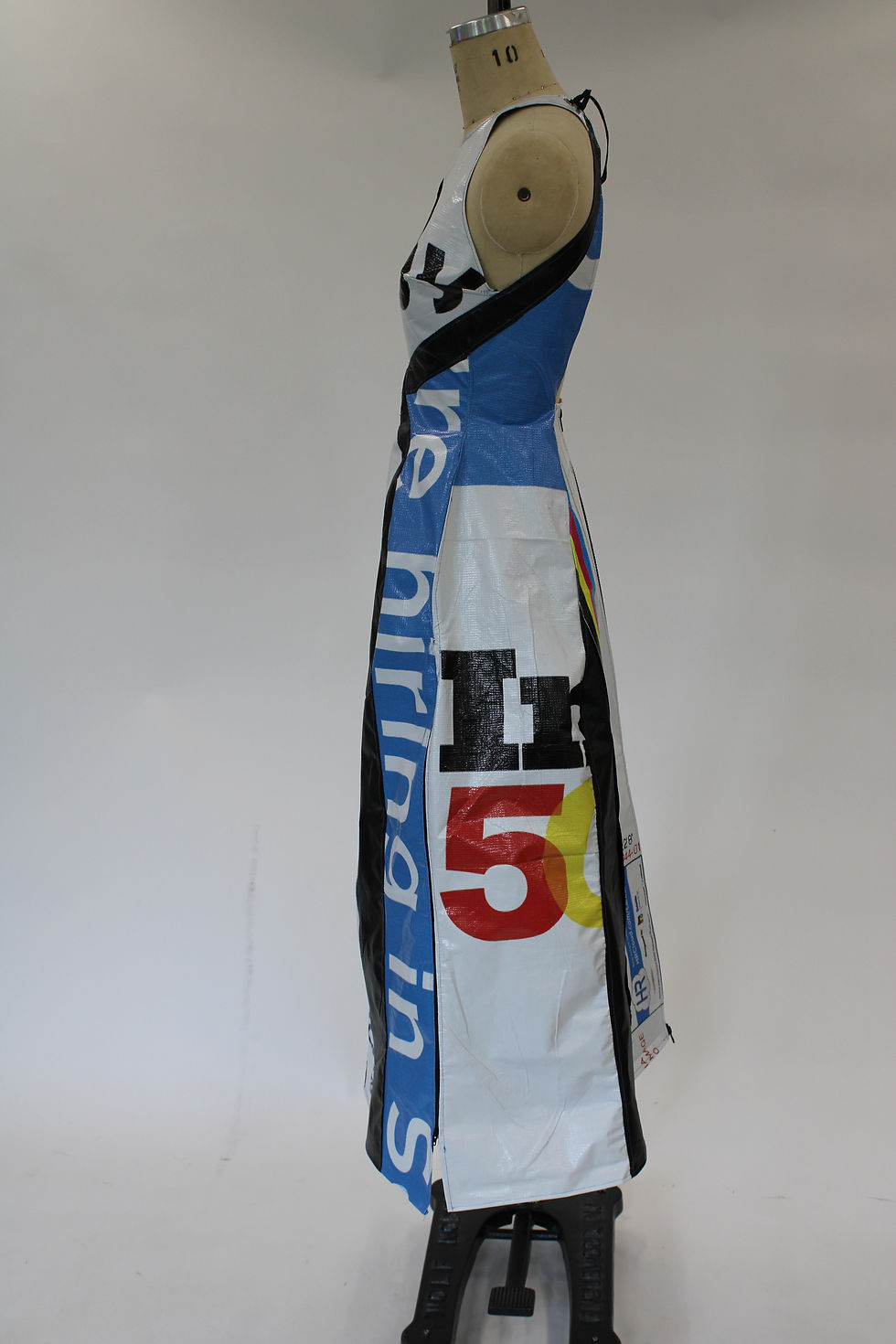
The Times Square dress takes inspiration from 1960s styles, specifically the paper dresses, the space race, and mod styles (Victoria and Albert Museum, n.d.). The A-line silhouette and large blocks of color and text in the Times Square dress speak to the mod and futuristic designs of the 1960s. The use of vinyl in this dress creates a modern and sustainable take on the novelty paper dresses of the time. This dress makes use of vertical style lines and color to create a symmetric and flattering silhouette. To achieve this aesthetic, the pattern pieces were strategically laid out on the vinyl (see Figure 1 for the billboard design). As many words and colors were used as possible to make the overall look of the dress slightly overwhelming, emanating the feeling of stepping out into Times Square for the first time.

Figure 1: This is a small scale version of the billboard that is first printed on the back of the vinyl as mockup. It tests to make sure the color used on the billboard is printing correctly. On the right of this mockup is the full scale dimension: 10'x22'8"
Process, Technique, and Execution
The billboard used for this garment was acquired from the industrial thrift store, Repurposed Materials. The HRCloud billboard was originally from 2011, made of double-sided vinyl, and measured 10’ x 22’8”. After initially handling the billboard, my hands were black from the dirt that had built up on the billboard during its life. So, after cutting out my pattern pieces, I soaked and scrubbed all the pieces in a bathtub filled with dawn dish soap and laundry detergent.
After sewing several test products, I learned it was difficult to sew sleeves and legs because there was no stretch to the vinyl. Thus, I decided a sleeveless dress would be best to allow the wearer mobility and ventilation. The design process began by mapping out a design on a dress form with twill tape and draping with muslin. Then, I decided to do a “muslin” dress with the billboard material to familiarize myself with the process and determine the best techniques to handle the challenging material. I quickly discovered that there is little room for error as any hole put in the fabric would be a permanent visible mark. Thus, I had to use tape instead of sewing pins to hold the material together. In accordance with O’Rourke-Kaplan’s (2013) findings, although the material is extremely thin, it is also extremely rigid. The material is unable to be ironed which made top stitching the best choice for clean seam appearances. I also used an industrial Juki sewing machine with heavy duty thread and a longer stitch length. Seams and edges were serged and top stitched in place to maintain a crisp appearance. Due to the minimal breathability of the material, I added invisible zippers on the sides of the dress to give the wearer adjustable slits for easier movement and air flow. The back of the dress features a double separating zipper, to aid in donning the dress and to provide another place for an adjustable slit.
Cohesion, Originality, and Innovation
Much like Times Square itself, the wearer of this dress becomes an advertisement. The combination of wordplay and color are pushed to the limit to create a cohesive ensemble. Overall, this dress combines 1960s garment styles with a modern sustainable material to encourage the upcycling of used billboards. Due to the large amount of billboard vinyl waste, there is an opportunity to explore it as an alternative material for apparel. While there are companies exploring this as an option for tarps, tote bags, and more, the Times Square dress takes this a step further to experiment with apparel applications.
References
Billboard Tarps. (n.d.). Reused Billboard Vinyl. Billboardtarps.com. https://billboardtarps.com/product-category/billboard-vinyl/#:~:text=Billboard%20vinyl%20tarps%20work%20so,is%20either%20black%20or%20white.
Effortless Outdoor Media. (2018, May 19). Vinyl Billboard – What is it? How do they get made?. https://www.effortlessoutdoormedia.com/vinyl-billboard/
O’Rourke-Kaplan, M., (2013) “On the Road Again”, International Textile and Apparel Association Annual Conference Proceedings 70(1).
Rareform. (n.d.). About Us. Rareform.com. https://www.rareform.com/pages/about
Saroj, Y., Swati, B., Guru Prasad, V., Sibi, G. (2018). Future of Vinyl Banners: Chemical Composition, Toxicity, Environmental Impact and Degradation. International Journal of Environmental Sciences & Natural Resources, 15(4). DOI: 10.19080/IJESNR.2018.15.555916.
Victoria and Albert Museum (n.d.). An introduction to 1960s fashion. https://www.vam.ac.uk/articles/an-introduction-to-1960s-fashion
Zee, G. (2010, July 29). From billboards to handbags… NBC Chicago. https://www.nbcchicago.com/news/green/green-billboard/1899662.